5 Photo Checkpoints That Track Masters Athlete Progress Better Than the Scale
Quick Answer: Weight fluctuates with water, hormones, and muscle gain in ways that mislead masters athletes specifically. Five targeted photo checkpoints — posture, grip task, warmup range, recovery day energy, and a functional movement — track real progress the scale can’t see.
After 40, body composition shifts even when the scale barely moves — more muscle, similar weight, completely different capability. These checkpoints capture what’s actually changing.

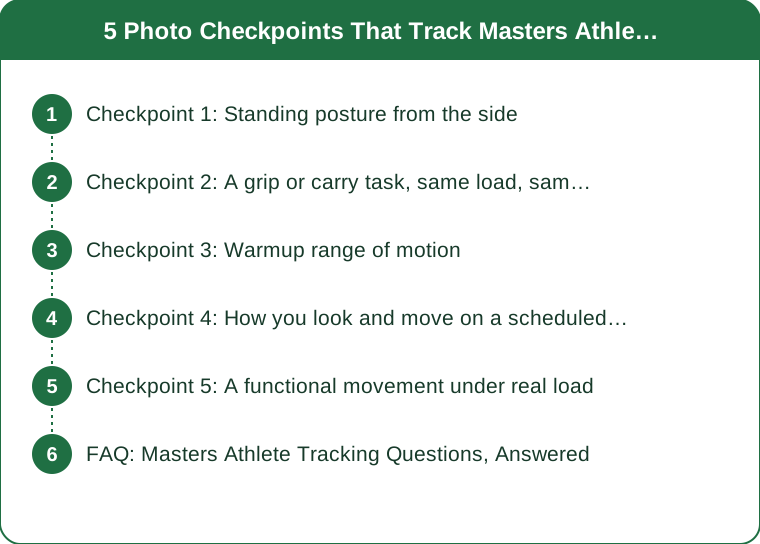
Checkpoint 1: Standing posture from the side
A monthly side-profile photo in the same spot, same lighting, reveals postural changes — reduced forward head posture, better shoulder position — that come from consistent strength training but never show up on a scale. Masters athletes often see this shift before they see visible muscle change.
Checkpoint 2: A grip or carry task, same load, same distance
Photograph or video yourself doing a farmer’s carry with a fixed weight and distance monthly. Improved posture and reduced strain in the video — even at the identical weight — is direct evidence of the total-body strength and grip improvements central to healthy aging, independent of any weight change.
Checkpoint 3: Warmup range of motion
A simple monthly photo of your deepest comfortable squat or overhead reach during warmup tracks joint mobility trends that matter enormously for masters athletes but are invisible on a scale. Improving or maintaining this range is often a better long-term health indicator than weight.

Checkpoint 4: How you look and move on a scheduled rest day
A candid photo or note on a planned rest day — posture, visible tension, energy in your face — tracks recovery capacity, which changes meaningfully with consistent training after 40 even when weight is stable. Athletes who are recovering well typically show looser, more relaxed posture on rest days over time.
Checkpoint 5: A functional movement under real load
Video a single-leg step-up or a loaded carry monthly. Improvements in control, speed, and confidence under the same load — again, regardless of what the scale says — is the clearest visual evidence that masters-specific training (which prioritizes function over aesthetics) is actually working.
FAQ: Masters Athlete Tracking Questions, Answered
Why does the scale become less reliable after 40?
Hormonal shifts, changes in water retention, and simultaneous muscle gain with fat loss can keep total weight stable while body composition changes significantly — the scale can’t separate those factors.
How often should these checkpoint photos be taken?
Monthly is frequent enough to see real trends without obsessing over day-to-day noise, and consistent conditions (same time of day, similar lighting) make comparisons more meaningful.
Are these checkpoints useful for tracking recovery, not just strength?
Yes — checkpoints 3 and 4 specifically are aimed at recovery capacity, which becomes an increasingly important training variable to track after 40 alongside strength gains.
TL;DR:
- The scale hides real progress after 40 due to simultaneous muscle gain and composition shifts
- Track posture, a fixed-load carry, warmup mobility, rest-day recovery signs, and a functional movement
- Monthly, consistent-condition photos reveal trends the scale physically cannot
- Function and recovery matter as much as strength numbers for masters athletes
Progress after 40 often shows up in how you move, not what you weigh.
Keep Reading
This article is for general informational and styling purposes only. Fit, sizing, and product availability may vary.