Forget Soreness — This Is the Recovery Metric Masters Athletes Should Actually Track
Quick Answer: Resting heart rate variability (or even simple morning resting heart rate) is a more reliable recovery signal for masters athletes than muscle soreness, because recovery capacity changes with age in ways that don’t always show up as soreness until well after the underlying fatigue has built up.
You feel fine — no real soreness — so you go hard again, and two days later you’re wrecked. After 40, soreness stops being a trustworthy early warning system, and something else needs to take its place.

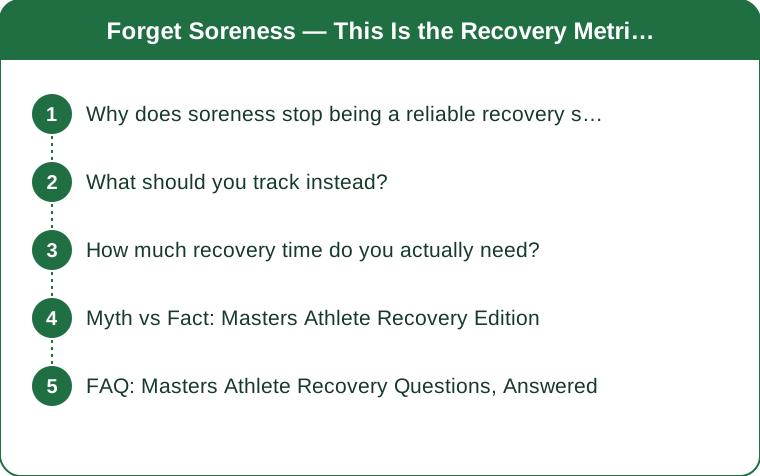
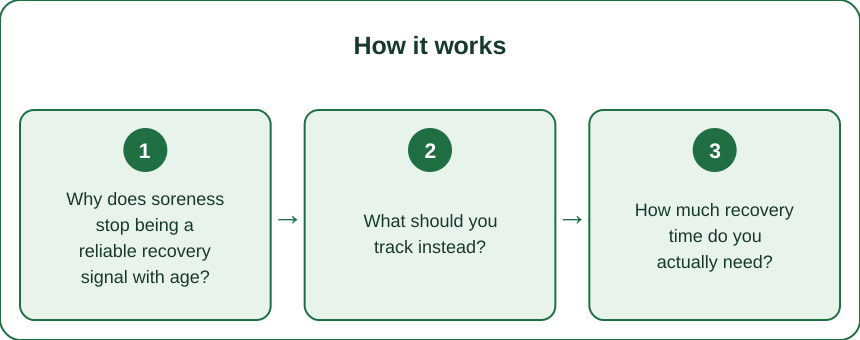
Why does soreness stop being a reliable recovery signal with age?
Recovery capacity — how fast the body clears inflammation and rebuilds tissue — declines gradually with age, but the sensation of soreness doesn’t decline at the same rate or in the same pattern. This creates a mismatch: masters athletes can feel deceptively fine while underlying fatigue and incomplete recovery are still accumulating beneath the surface.
What should you track instead?
Morning resting heart rate, checked at the same time each day before getting up, is a simple and accessible proxy. An elevated resting heart rate of 5+ beats above your normal baseline is a reasonably reliable sign that your body is still in recovery mode, even if you don’t feel sore. Heart rate variability (HRV), tracked via a wearable, is more precise but resting heart rate alone works well without extra equipment.

How much recovery time do you actually need?
There’s no single number, but masters athletes generally need modestly more recovery time between hard sessions than they did in their 20s and 30s for equivalent training loads — often an extra day for high-intensity or heavy-load work. The key is that this need often doesn’t correlate with how sore you feel, which is exactly why soreness alone is the wrong metric to plan around.
Myth vs Fact: Masters Athlete Recovery Edition
Myth: If you’re not sore, you’re recovered. Fact: Soreness and true physiological recovery are only loosely correlated, more so with age — resting heart rate and performance metrics track recovery more reliably.
Myth: Recovery needs are basically the same until age 60+. Fact: Measurable changes in recovery capacity are commonly noted starting in the 40s, well before 60.
Myth: More rest days always means better recovery. Fact: Beyond a certain point extra rest without any activity doesn’t speed recovery further, and some light movement often supports recovery better than complete inactivity.
FAQ: Masters Athlete Recovery Questions, Answered
Do you need a wearable device to track this?
No — a simple manual pulse check first thing in the morning, done consistently, gives you a usable baseline without any device.
What if resting heart rate is elevated but you feel fine?
Treat the data as the more reliable signal — an easier session or extra rest day is a reasonable precaution even without subjective symptoms.
Does sleep quality affect this metric?
Yes significantly — poor sleep alone can elevate resting heart rate independent of training fatigue, so track sleep alongside heart rate for a fuller picture.
TL;DR:
- Soreness becomes an unreliable recovery signal with age — track something more objective instead
- Morning resting heart rate, checked consistently, is an accessible and useful proxy
- A 5+ beat elevation above baseline suggests you’re still recovering, sore or not
- Masters athletes generally need more recovery time between hard sessions than they did decades earlier
Stop asking “am I sore?” and start asking “what’s my resting heart rate today?” — it’ll catch what soreness misses.
Keep Reading
This article is for general informational and styling purposes only. Fit, sizing, and product availability may vary.