Training After 40: What Actually Changes (and What Doesn't)
Quick Answer: After 40, recovery time between hard sessions typically lengthens, warm-ups become more important for joint health, and injury risk from sudden intensity spikes rises — but strength, muscle, and performance gains are still very achievable with training that respects these shifts rather than ignoring them.
The biggest myth about training after 40 isn’t that you’ll get weaker — it’s that the same exact program that worked at 25 will still work exactly the same way now.

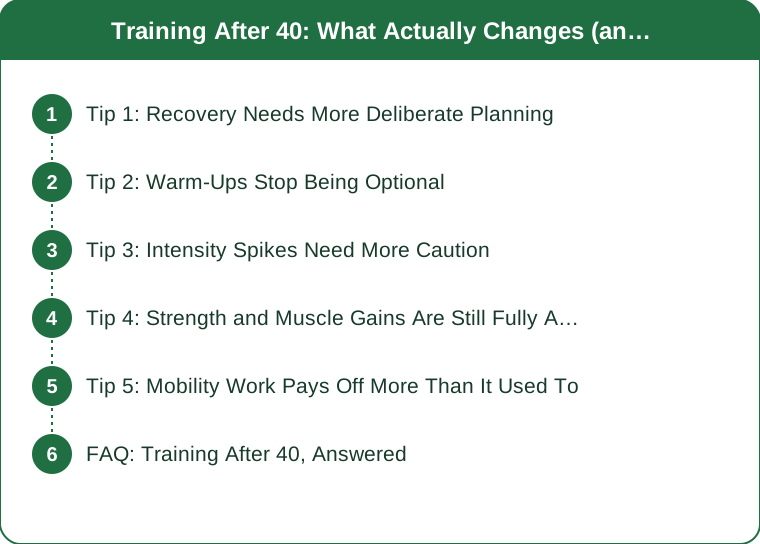
Tip 1: Recovery Needs More Deliberate Planning
Recovery between hard sessions for the same muscle group often needs to stretch from 48 to closer to 72 hours past 40, as tissue repair and hormonal recovery processes slow modestly with age. Building this into a weekly split from the start prevents accumulated fatigue rather than reacting to it after burnout hits.
Tip 2: Warm-Ups Stop Being Optional
A rushed or skipped warm-up becomes a much higher injury risk factor after 40, as joint lubrication and tissue elasticity respond more to preparation than they did in your 20s. A genuine 8-10 minute warm-up — light cardio plus dynamic mobility work for the specific joints you’ll load — meaningfully reduces strain injuries.
Tip 3: Intensity Spikes Need More Caution
Suddenly jumping into a much heavier weight or a new high-impact activity carries disproportionately higher injury risk at this stage compared to the same jump at 25. Progressive, gradual increases — even if it feels slower than you’d like — protect long-term training consistency far better than aggressive jumps.

Tip 4: Strength and Muscle Gains Are Still Fully Achievable
Despite the adjustments above, research consistently shows meaningful strength and muscle gains remain achievable well into your 40s, 50s, and beyond with consistent progressive resistance training. The ceiling doesn’t disappear — the path to it just needs slightly different pacing and preparation.
Tip 5: Mobility Work Pays Off More Than It Used To
Dedicated mobility and flexibility work — even just 10 minutes a few times weekly — increasingly pays dividends after 40 by preserving range of motion that naturally tends to narrow with age if not actively maintained. This isn’t about becoming a yoga expert, just not letting mobility quietly slip.
FAQ: Training After 40, Answered
Do I need to train less overall volume after 40?
Not necessarily less total volume, but often more spread out across the week with better-planned recovery days built in.
Is it too late to start strength training for the first time after 40?
Not at all — many people see excellent results starting resistance training for the first time well into their 40s and 50s.
How do I know if I’m not warming up enough?
Recurring minor strains or joints that feel stiff through the first several reps of a session are common signs a longer warm-up would help.
TL;DR:
- Recovery between hard sessions often needs to stretch toward 72 hours after 40
- A genuine 8-10 minute warm-up meaningfully reduces injury risk at this stage
- Progressive increases matter more than they did in your 20s — avoid sudden jumps
- Real strength and muscle gains remain fully achievable well past 40 with the right pacing
Training after 40 isn’t a downgrade — it’s the same goals with smarter sequencing.
Keep Reading
This article is for general informational and styling purposes only. Fit, sizing, and product availability may vary.